Permission levels in Shiftie determine what each employee can see and do within your company’s account. These levels are organised into five preset access roles, each offering different capabilities. Some permissions can also be restricted more granularly, giving you deeper control over sensitive information such as pay rates and labour costs.
This guide explains what each access role includes, how permissions behave in special cases, and how to update an employee’s access role.
This article covers:
- What are access roles?
- How do I change access roles?
- What should I use each access role for?
- Glossary of Terms
- Frequently Asked Questions
What are Access Roles?
Shiftie defines permissions through five preset access roles. Each role grants increasing levels of access to system features. Some permissions, such as viewing pay rates or labour costs, can be restricted to specific employees. See “How do I change access roles?” below for more information.
Additional Responsibilities
Permissions aren’t always strictly tied to access roles. Some responsibilities grant additional visibility:
- Leave Approver: If an employee is set as the leave approver for another team member, they can view and respond to that employee’s leave requests, even if their access role wouldn’t normally allow profile visibility.
- Line Manager: If an employee is assigned as a line manager, they can view that team member’s profile and edit employment‑specific fields, regardless of their normal profile‑viewing permissions.
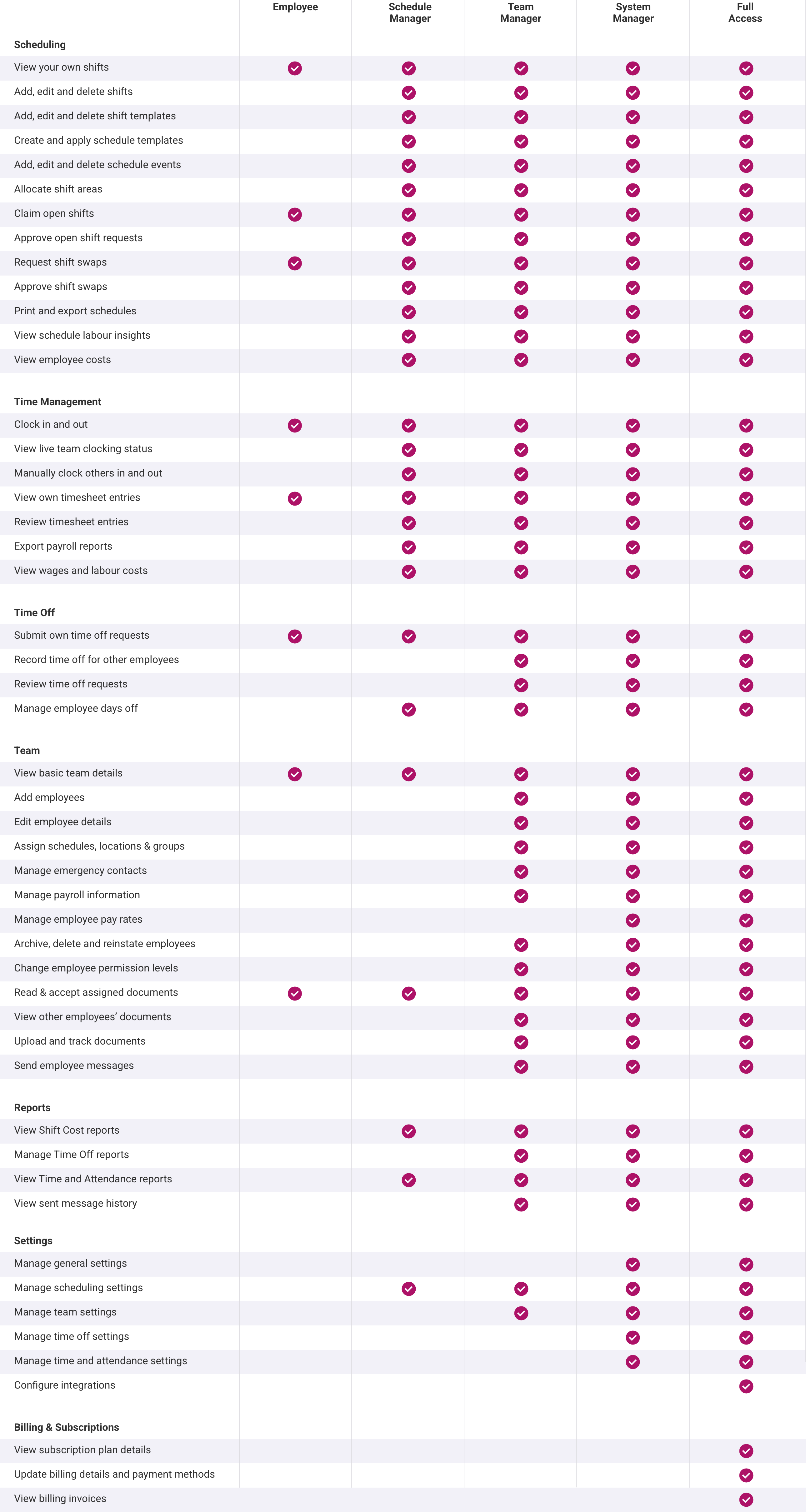
[Figure 1 - Access role permissions table]
How do I change access roles?
You can update an employee’s access role from their profile “Permissions” page.
Steps
1. Visit Team and click on a team member to open their profile.
2. Navigate to the “Permissions” page.
3. Select the desired access role from the access role field.
4. Review any optional restrictions for higher‑level roles.
Restricting Permissions
Some permissions for higher‑level roles can be limited so the employee can only act on selected employees’ data. These include:
- Setting pay rates: Can be turned off or set to everyone, line-managees or a custom selection.
- Viewing employee costs: Can be turned off or set to everyone, line-managees or a custom selection.
- Viewing labour costs: Can be turned on or off.
Additional Rules
- The Account Owner always has Full Access and cannot have their permissions changed or restricted.
- Employees who can edit permissions cannot assign a role with more access than their own, regardless of any restrictions applied.
- Employees who can edit permissions cannot change another employee with a higher role than their own.
- Employees who can edit permissions can only change their own level to a lower one than they already have and they cannot change their own permission scopes.
What should I use each access level for?
Below is a summary of each access role and when it’s most appropriate to use.
Employee
An employee is your company’s base team members, typically those who just need to clock in and out with no other management of the system. If the employee only needs to work their scheduled shifts and have no other responsibilities, then this is the access role for them.
Schedule Manager
A Schedule Manager has restricted access to most of the system; they are able to manage shifts across schedules and handle timesheets. They can only see pay and cost information for employees they are specifically allowed to view. Allocating an employee as a Line Manager will grant them more capabilities for managing their line-managee’s details. This role is best suited to employees who require access to scheduling shifts but do not need full team visibility.
Team Manager
A Team Manager has similar access to a Schedule Manager but with broader accessibility of controlling team member details. They do not need to be assigned as a line manager to view employee profiles. They can perform most HR and payroll actions such as managing documents and reviewing timesheets. They can only see pay and cost information for employees they are restricted to see it for. This role is best suited to an HR team member who has access to all team details.
System Manager
A System Manager can do nearly everything, except manage billing details for the company’s subscription and manage integration connections. They are generally the second in command at your company with a full overview of the system and the ability to change most system settings. If the employee needs to control the system but doesn’t have access to the company’s billing details, this is the best role for them.
Full Access
A Full Access level employee can do everything in the system. They are generally the business owners or administrative heads of the business. Do not give anyone this access level unless you trust them with access to everything in the account.
In order to have a main point of communication between Shiftie and your company, an Account Owner is defined in General Settings. The Account Owner is restricted to the Full Access role so they can perform all actions.
Glossary of Terms
Access Role: A predefined set of permissions that determine what an employee can see and do within Shiftie.
Account Owner: The primary administrator of the Shiftie account who has Full Access and cannot have their permissions changed.
Line Manager: An employee assigned to oversee specific team members, with additional permissions to view and edit their profiles.
Line Managee: A team member a line manager has been granted access to oversee.
Leave Approver: An employee responsible for approving leave requests, with visibility into those requests regardless of their access role.
Pay Rates: The salary or wage information for employees, which can be restricted to certain access roles.
Labour Costs: The total cost associated with employee labour, including wages and related expenses, which can be restricted.
Permissions: The specific capabilities granted to an employee through their access role or additional responsibilities.
Restricted Permissions: Limitations applied to certain permissions, allowing access only to selected employees’ data.
Schedule Manager: An access role focused on managing shifts and timesheets with limited visibility.
System Manager: A high-level access role with broad system control, excluding billing and integrations.
Team Manager: An access role with broad access to employee details and HR functions.
Full Access: The highest access role with unrestricted permissions.
Frequently Asked Questions (FAQs)
Q: Can I assign an access role higher than my own?
A: No, employees who can edit permissions cannot assign roles with more access than their own.
Q: Can I change my own permission level?
A: Yes and no. You can change your own access role to a lower one than you already have, but you can’t change any role restrictions.
Q: Can I change my own permission level?
A: Yes and no. You can change your own access role to a lower one than you already have, but you can’t change any role restrictions.
Q: Can permissions be restricted within an access role?
A: Yes, some permissions for higher-level roles can be limited to specific employees’ data.
Q: Who is the Account Owner and what access do they have?
A: The Account Owner is the primary administrator with Full Access and cannot have their permissions changed.
Q: What additional visibility do Leave Approvers and Line Managers have?
A: Leave Approvers can view and respond to leave requests for assigned employees, and Line Managers can view and edit profiles of their line-managees regardless of their general permissions.
Q: When should I use each access role?
A: Use Employee for basic team members, Schedule Manager for shift management, Team Manager for HR functions, System Manager for system control, and Full Access for business owners or admins.
Q: Can I change an employee’s access role?
A: Yes, access roles can be updated from the employee’s profile under the Permissions page.
Q: Are there any limitations on changing access roles?
A: Yes, the Account Owner’s role cannot be changed, and you cannot assign roles with more access than your own.
Was this article helpful?
That’s Great!
Thank you for your feedback
Sorry! We couldn't be helpful
Thank you for your feedback
Feedback sent
We appreciate your effort and will try to fix the article